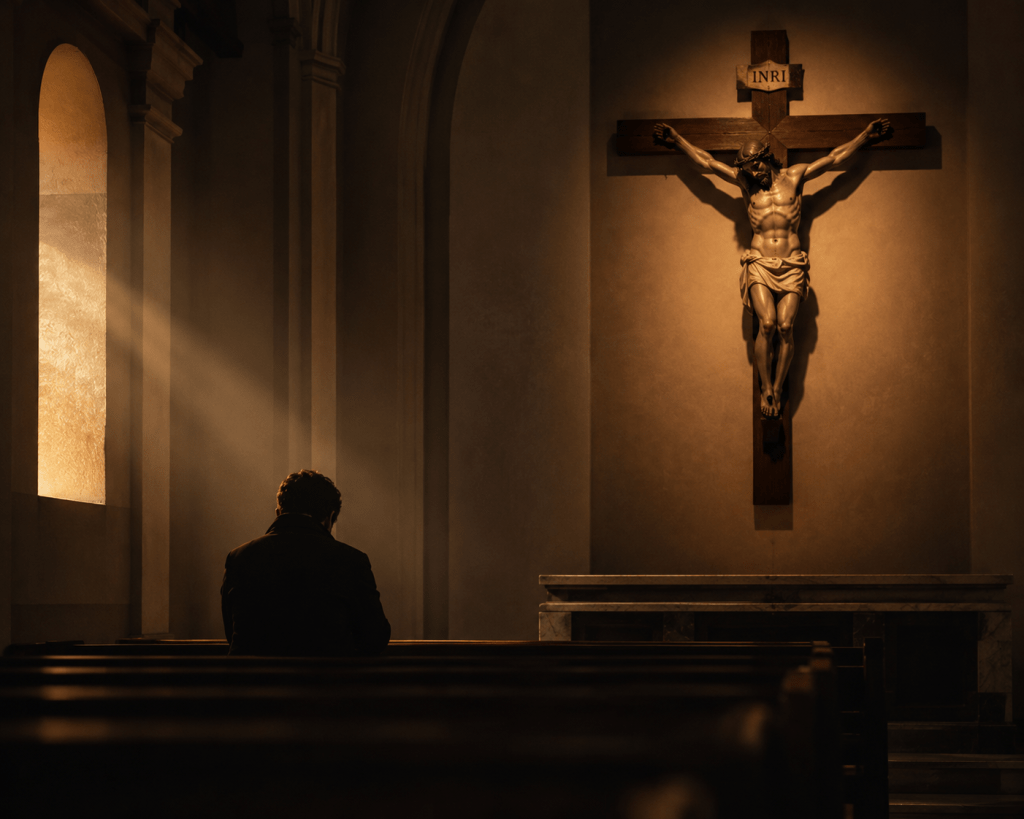
There are moments in the spiritual life when God seems very close. Prayer becomes easy, the heart is moved deeply, and tears come naturally before the Blessed Sacrament. A hymn touches the soul, Scripture appears meaningful, and one experiences peace, joy, enthusiasm, and spiritual energy. During such moments, people often feel that they are very close to God.
However, there are also moments when prayer becomes dry and difficult. The rosary feels burdensome, meditation becomes hard, and the heart feels empty. The same chapel that once brought peace now feels silent. A person speaks to God but experiences no response. One continues to pray, yet interiorly feels nothing. These moments often create confusion and fear.
Many people become disturbed during such experiences. Some begin to think that they are losing their faith. Others slowly reduce their prayer life because they no longer “feel” God. Some start searching constantly for emotional experiences through retreats, songs, talks, or spiritual programs. Gradually, spirituality becomes dependent on feelings and emotions.
Yet authentic spiritual life often begins precisely at this stage.
Jesus never taught that love should be measured by emotions. He taught that love is measured by faithfulness.
On Calvary, Jesus did not experience consolation or comfort. He experienced pain, darkness, abandonment, humiliation, and silence. From the Cross He cried, “My God, my God, why have you forsaken me?” Yet at that very moment, He was carrying out the greatest act of love in history.
Many people imagine holiness as a constant experience of spiritual feelings and emotional fervour. However, Jesus reveals a deeper truth. Holiness means remaining faithful to God even when one experiences no emotional consolation.
For this reason, many saints warned against confusing emotions with spiritual maturity.
Saint John of the Cross spoke about what he called the “dark night of the soul.” He explained that God sometimes withdraws spiritual consolations not because He is far away, but because He desires to lead the soul into deeper love. God removes spiritual sweetness so that a person may seek Him and not merely His gifts.
A child may love a father because of the gifts he gives, but maturity begins when the child loves the father even without receiving gifts.
Similarly, immature spirituality seeks consolations, while mature spirituality seeks God Himself.
Many people stop praying when prayer becomes difficult and dry. However, dryness is not always a sign of spiritual failure. Sometimes dryness becomes the means through which God teaches a soul to love Him more purely.
Anyone can pray when prayer feels beautiful and consoling. However, the person who continues to kneel before God in dryness, distraction, confusion, and exhaustion, while still saying, “Lord, I trust You,” is growing deeply in holiness.
Saint Mother Teresa experienced profound interior darkness for many years. Outwardly she smiled, served the poor, radiated charity, and inspired the world. Inwardly, however, she often felt abandoned and spiritually dry. Yet she continued to love and serve Jesus faithfully every day.
That is holiness.
Holiness is not emotional excitement, spiritual entertainment, or temporary inspiration. Holiness means remaining faithful to Jesus.
Sometimes spirituality can unknowingly become self centered. People begin asking questions such as: “Did I feel something during prayer?” “Did the retreat inspire me emotionally?” “Did I experience peace during Mass?”
However, the deeper questions are different. Did I become more loving? Did I grow in patience? Did I forgive others? Did I become more humble? Did I carry my cross quietly like Jesus?
Authentic prayer changes not only emotions but also character.
A person may cry during worship and still remain proud, impatient, selfish, or unforgiving. Another person may feel nothing during prayer and yet become kinder, gentler, more faithful, more self sacrificing, and more Christ like. The second person is often growing more deeply in spiritual life.
Jesus did not say, “People will know you are my disciples because of your emotions.” He said that His disciples would be known by their love.
One of the dangers today is the desire for spiritual experiences without spiritual transformation. Many seek peace without repentance, comfort without sacrifice, and resurrection without the Cross.
However, Jesus walked another path.
The Gospel is not centred on feelings but on the transformation of the human heart.
To become like Jesus means learning to remain faithful even in hiddenness and silence. Jesus spent thirty years in Nazareth without public recognition, miracles, or applause. The Son of God embraced an ordinary hidden life. Even in silence, He remained obedient, humble, and faithful.
Today many people fear hiddenness. They seek visible success, appreciation, recognition, and constant affirmation. Even in spiritual life, people often desire to feel spiritual all the time.
Yet Jesus teaches that God often works most deeply in silence.
A seed grows underground long before it becomes visible. In the same way, many holy things grow silently.
A mother waking early every day to pray for her family, a religious remaining faithful despite interior dryness, a priest celebrating Mass while carrying hidden struggles, a young person resisting temptation quietly, and a sick person offering suffering to God without complaint are all precious before God.
The saints constantly remind us that the Cross is not the absence of God. Very often, it becomes the place of deepest union with Him.
Saint Thérèse of Lisieux said that holiness does not consist in doing extraordinary things but in doing ordinary things with extraordinary love.
Spiritual greatness is therefore often found in simple acts such as praying when tired, forgiving when wounded, smiling when burdened, remaining pure in a corrupt world, being patient with difficult people, and continuing to pray even when nothing is felt.
This is how Jesus loved.
When Jesus prayed in Gethsemane, He did not experience peace or comfort. He sweat blood in agony. Yet He still prayed, “Not my will, but Yours be done.”
Authentic spirituality begins when obedience becomes more important than emotion.
Many people abandon prayer because they think God has abandoned them. However, God may actually be inviting them into deeper friendship. In the beginning of spiritual life, God may attract the soul through sweetness and consolation. Later, He may allow silence and dryness in order to purify love.
A husband who remains faithful only during happy moments does not fully understand love. Love becomes genuine when a person remains faithful during sacrifice, misunderstanding, suffering, and silence.
The same is true in one’s relationship with God.
The Christian life is not a constant experience of spiritual excitement. Even Jesus descended from Mount Tabor and walked toward Calvary.
There will be days when prayer feels beautiful and comforting. There will also be days when prayer feels difficult and burdensome. Yet one must continue to pray.
There will be days when Scripture speaks powerfully to the heart. There will also be days when it feels dry and distant. Yet one must continue reading.
There will be days when Jesus feels close. There will also be days when He seems silent. Yet one must remain faithful.
Love is proven not by consolation but by fidelity.
Perhaps some of the greatest saints today are unknown people who continue loving God silently without emotional rewards or recognition. Heaven sees what the world cannot see.
One of the deepest spiritual dangers today is superficial spirituality that lacks depth, sacrifice, perseverance, and acceptance of the Cross.
Jesus did not save the world through comfort. He saved the world through love that endured suffering.
If people truly desire to become like Jesus, they must stop measuring spiritual life only through emotions and feelings. Feelings are gifts, but they are not the foundation of spiritual life. Christ Himself is the foundation.
And Christ remains worthy even when the heart feels dry.
At the end of life, Jesus will not ask how many consolations a person experienced. He will ask whether one remained faithful, loved others, carried the cross faithfully, and became more like Him.
Therefore, one must pray for the grace not merely to seek spiritual feelings, but to seek Jesus Himself.
When silence comes, when dryness comes, and when prayer becomes difficult, one must not run away from God. Often, the moments when God feels most distant are the moments when He is shaping the soul most deeply into the image of His Son.







Leave a comment