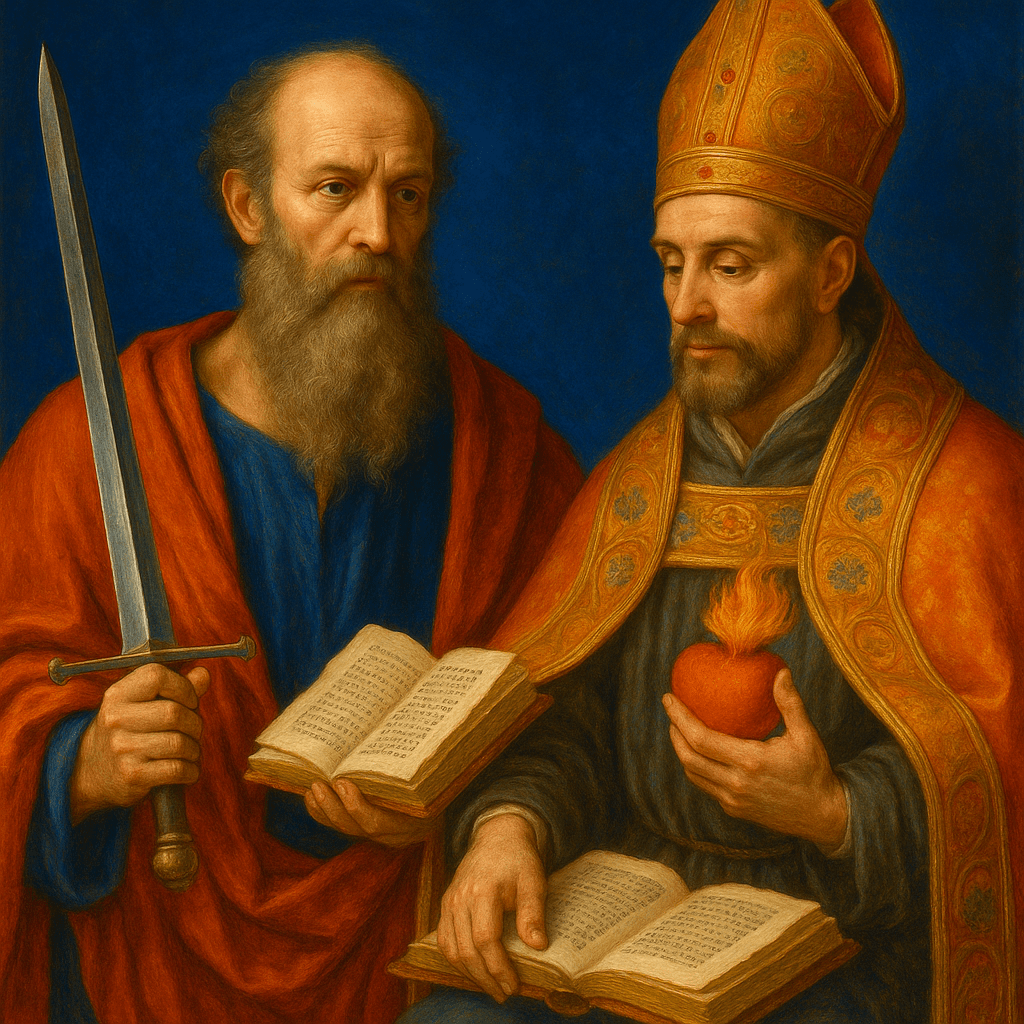
There are hearts that carry a holy ache. It is not loud, but it never sleeps. It hides beneath laughter, beneath success, beneath every fleeting joy. It is the ache of being human. The ache of knowing that nothing here fully satisfies. St Paul and St Augustine knew this ache well. It lived in their bones long before they knew its name. They searched for truth not because they lacked intelligence, but because they longed for wholeness.
Paul ran with zeal, convinced that his passion was righteous. His life was full of certainties. He thought he saw clearly. Yet one encounter with divine love, and all his vision collapsed into blindness. On the road to Damascus, he fell, not because he was weak, but because he was finally ready to be found. That fall was not an end. It was a beginning. He rose, not as the same man, but as one who had seen light from within the darkness. What he once hated became his life’s purpose. What he once crushed, now carried him.
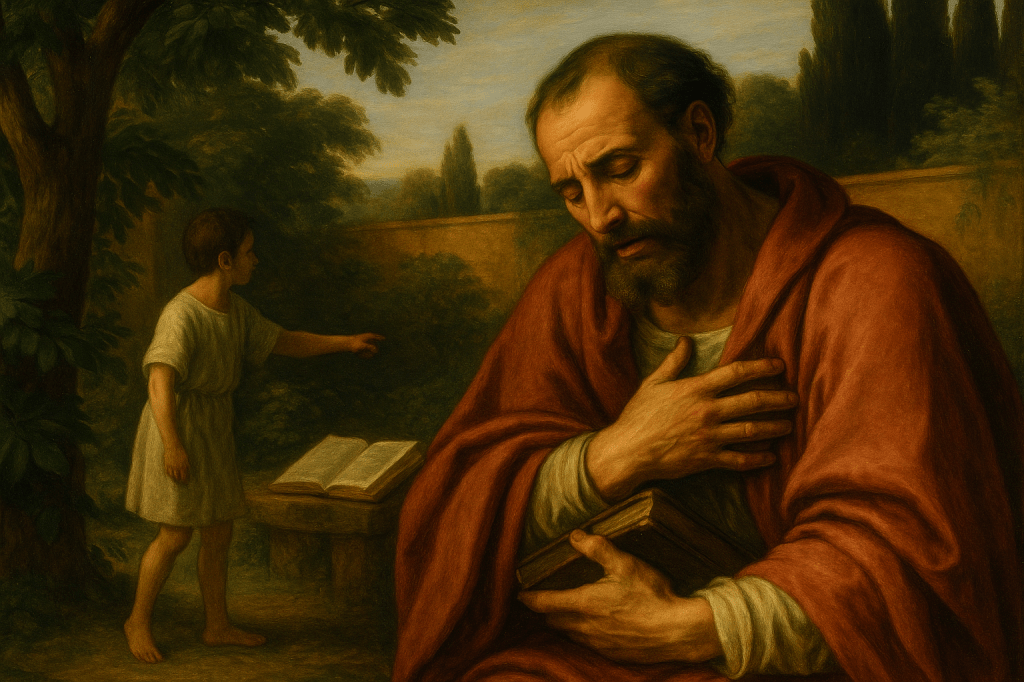
Augustine’s journey was quieter, more painful, and stretched over years. His mind soared through philosophy and poetry, yet his heart limped behind. He sought beauty in women, truth in books, meaning in applause. But still, he wept in secret. Still, he could not outrun the silence within. It was not sin that finally undid him. It was love. A love so patient, it waited through years of wandering. A love so deep, it made every pleasure seem pale. When he finally surrendered, he did not come to God as a theologian. He came as a son. A child who had come home.
There is something deeply human in both their stories. A yearning that mirrors our own. The restlessness we often feel is not a flaw. It is a map. It tells us that we were made for something more. We distract ourselves with noise, success, comfort. But beneath it all, the ache remains. It is not something to fear. It is something to follow. For within that ache, God whispers.
Both Paul and Augustine teach us that the truth does not crush us. It heals us. It breaks our illusions, not our dignity. It shows us who we are, not to shame us, but to save us. The turning point in their lives was not when they became perfect, but when they allowed grace to break through their defenses. It was not their strength that brought them home, but their surrender.
Spiritually, their lives speak to the deepest part of our souls. They tell us that God is not found in distant heavens, but in the trembling heart. That holiness is not about getting everything right, but about letting love in. They show us that transformation does not begin with answers. It begins with longing. With a cry in the night. With the courage to say, “I cannot do this on my own.”
Existentially, Paul and Augustine remind us that life is more than survival. We were not born just to earn, consume, and fade. We were made to seek, to wrestle, to love, to be loved. Their stories are not ancient history. They are mirrors. Every one of us is walking a road. Some are on horses of pride. Some are hiding in gardens of distraction. But grace walks with us still. And when it finally breaks in, it will not accuse us. It will embrace us. It will call us by name.
There is no path too crooked for God to straighten. No past too heavy for Him to redeem. No longing too deep for Him to fill. When Paul met Christ, he lost everything the world called valuable, but he gained a love that made all else look like dust. When Augustine found God, it was not the end of his questions. It was the beginning of wisdom.
And so, like them, let us follow the ache. Let us not silence it with noise. Let us not be afraid of our searching. Let us bring our restlessness to the One who alone can give us peace. For when we finally let ourselves be found, we too will say, “Late have I loved You… yet You were with me all along.”
And in that moment, everything will begin again. Not with fear. Not with guilt. But with a joy that rises quietly… like light after a long night.



 Zabenthung Dominic
Leave a comment