Reflection for the Feast of the Visitation of the Blessed Virgin Mary
Based on Luke 1:39–56
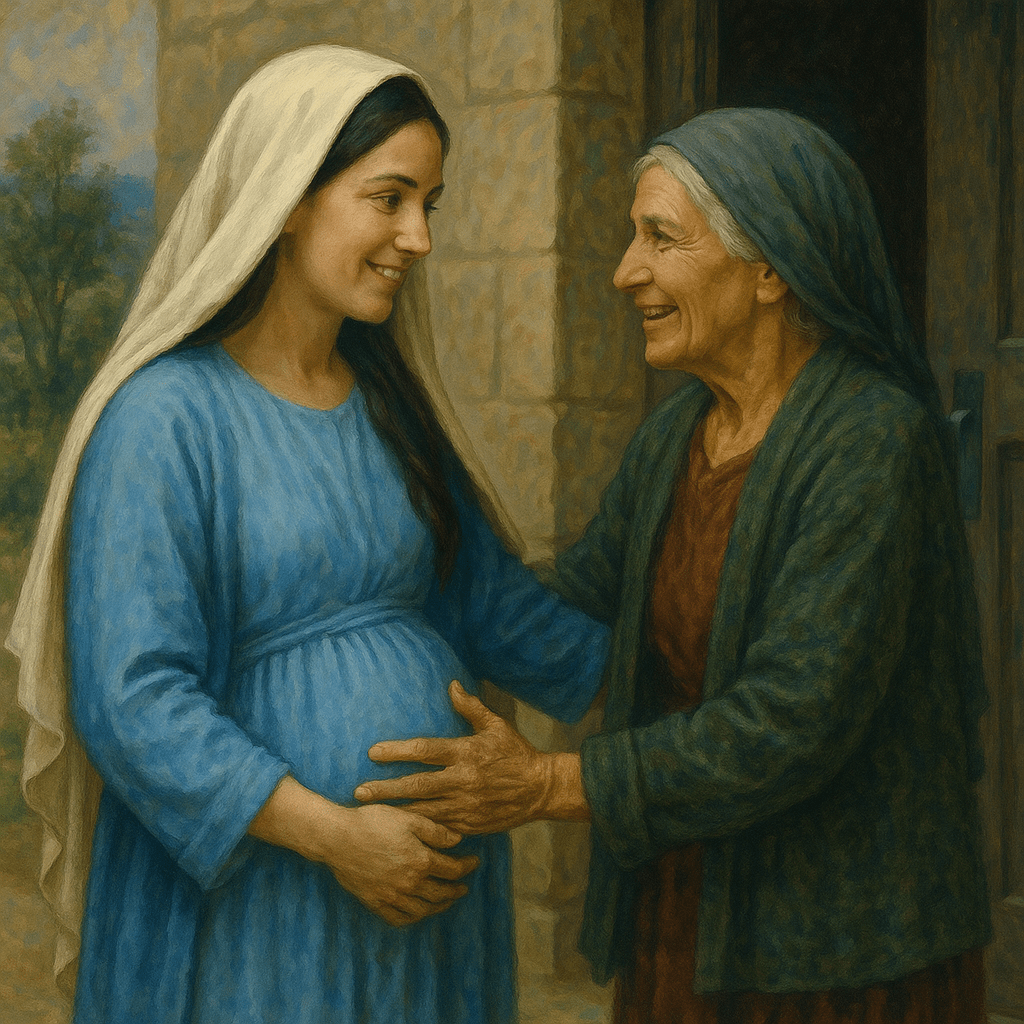
There are moments in life that do not come with thunder or trumpet, yet they change everything. Quietly, gently, they enter the heart and make it new. The Visitation of Mary to Elizabeth is one such moment. No stage, no spotlight, no crown. Just two women, two hearts, and a deep mystery unfolding in the stillness of love.
It begins with Mary, a young girl who had just received the most astonishing news. Her heart was surely full of questions, full of wonder, maybe even fear. But instead of staying in that space, she rose. Not slowly, not hesitantly, but with haste. She left behind the comfort of familiarity and walked the long road through the hills of Judah.
She did not go to be understood. She did not go to explain herself. She went to be with someone who could receive her heart without judgment. Someone who had also tasted the surprise of grace. She went to Elizabeth.
Try to imagine her journey. The early morning sun breaking through the clouds. The wind brushing past her veil. Her hands resting gently on her belly, her soul quietly singing. Every step she took was not just a movement across land, but a movement of love.
And then—she arrived.
At the sound of Mary’s voice, something sacred broke open in Elizabeth’s womb. The child within her leapt. Joy moved where only silence had been before. And suddenly, the world was not the same.
Two women. Two miracles. And one great outpouring of grace.
Mary did not perform a miracle. She did not preach. She simply showed up. And in doing so, she brought heaven with her.
This is what love does. It does not wait for the perfect moment. It does not ask for recognition. It simply moves. It climbs hills. It knocks on doors. It embraces. It listens.
The Visitation invites us to look again at the small journeys we often overlook. It tells us that every visit made in love, every act of presence, every simple word of blessing, carries something eternal. We do not need to carry answers. We only need to carry presence.
Mary’s song, the Magnificat, was not a performance. It was the natural overflow of a soul in love with God. It was a cry of joy from someone who had found her place in the great unfolding of grace.
We may not visit with angels. We may not sing with prophetic power. But we can walk in love. We can be present. We can bring joy by simply being there.
To imitate Mary is to rise each day with the courage to love. It is to walk toward others, not away. It is to notice the needs around us and bring with us the quiet song of hope.
The hills may be steep. The journey may be long. But love, real love, does not grow tired. It grows deeper.
And in this lies the invitation of the Visitation. To live not by the weight of our fears but by the light of our response. To rise each morning and ask not what the world owes us but whom we are being called to visit. To understand that life’s deepest meaning is not found in success or applause, but in those sacred moments when we choose to be there for one another with no need to be seen. The true path of fulfillment lies not in grasping but in giving, not in noise but in presence, not in perfection but in communion.
If Mary could walk the hills with nothing but love in her heart and trust in her steps, then perhaps we too can walk through this life with that same grace. We too can become bearers of joy in a world hungry for tenderness. We too can turn ordinary paths into sacred journeys by the way we show up, the way we love, and the way we listen.
So let us rise. Let us go forth. Let us make of our lives a Visitation. And in every step, let there be love.


 Zabenthung Dominic
Leave a comment